


Select A Store
Select Store
My Store:
Select A Store
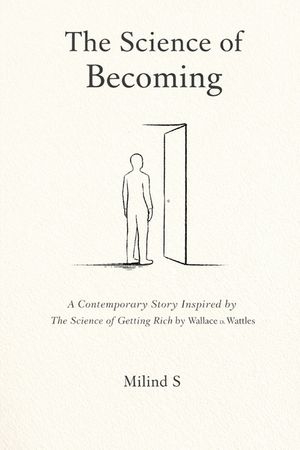
The Science of Becoming: A Contemporary Story Inspired by The Science of Getting Rich by Wallace D. Wattles
by S, Milind
Availability:
-
Online Only
$9.96
Overview
Overview
his is not a traditional self-help book.
This book does not claim to change your life, you have to do that yourself.
Have you ever felt that your life is busy, but not moving?
That you are working hard, thinking deeply, yet something essential remains out of alignment?
That despite reading books on success, mindset, abundance, or personal growth, clarity never quite stays?
The Science of Becoming is a quiet, contemporary story for readers who sense that transformation is not about motivation-but about order.
Set in familiar modern spaces-trains, workplaces, kitchens, streets, offices, and silent rooms where decisions are delayed-the story follows a narrator who begins to question how thought becomes action, how discipline can exist without force, and how progress can happen without constant struggle.
Inspired by the timeless ideas of Wallace D. Wattles' The Science of Getting Rich, this book explores themes of:
mindset and attention
clarity of purpose
gratitude and deliberate thought
meaningful action
personal growth without competition
abundance as a result of alignment
Rather than offering advice or formulas, the book unfolds these ideas through story and reflection, allowing readers to experience principles often discussed in self-help, law-of-attraction, and success philosophy-without hype, jargon, or promises.
This is not a financial guide.
It is not a motivational manual.
It is not a shortcut to wealth.
It is a philosophical narrative about becoming the kind of person whose life begins to feel less chaotic and more intentional-where effort becomes precise, decisions feel lighter, and progress emerges quietly.
Written in a calm, modern literary style, The Science of Becoming is ideal for readers who:
feel overwhelmed by constant urgency and comparison
are interested in mindset, abundance, and inner order
prefer thoughtful stories over instructional self-help
want ideas that can be practiced, not just admired
This book does not tell you what to believe.
It does not insist on certainty.
It simply invites you to slow down and notice what changes when thought and action begin to move in the same direction.
Because real transformation rarely announces itself.
It begins-almost unnoticed-when becoming matters more than arrival.
- Format: Trade Paperback
- Author: S, Milind
- ISBN: 9798241141484
- Condition: New
- Dimensions: 9.00 x 0.42
- Number Of Pages: 184
- Publication Year: 2026
Language:
English