


Select A Store
Select Store
My Store:
Select A Store
Availability:
-
Online Only
$94.49
Overview
Overview
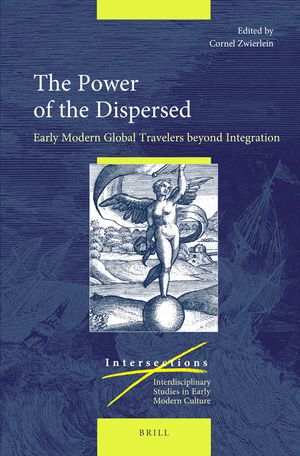
Early Modern travelers often did not form part of classic diaspora communities: they frequently never really settled, perhaps remaining abroad for some time in one place, then traveling further: not blown by the wind , but by changing and complex conditions that often turn out to make them unwelcome anywhere. The dispersed develop strategies of survival by keeping their distance to old and new temporary homes , and by manipulating, shaping, using information and foreign representations of their former country and situation.
The volume assembles case studies from the Mediterranean context, the Americas and Japan, asking for what kind of power(s) and agency dispersed people had counterintuitively, through the connections they maintained with their former home, and through those they established abroad.
Contributors include: Eduardo Angione, Iordan Avramov, Marloes Cornelissen, David Do Paço, José Luis Egío, Maria-Tsampika, Lampitsi, Paula Manstetten, Simon Mills, David Nelson, Adolfo Polo y a Borda, Ana M. Rodríguez-Rodríguez, Stefano Saracino, Cesare Santus, and Cornel Zwierlein.
The volume assembles case studies from the Mediterranean context, the Americas and Japan, asking for what kind of power(s) and agency dispersed people had counterintuitively, through the connections they maintained with their former home, and through those they established abroad.
Contributors include: Eduardo Angione, Iordan Avramov, Marloes Cornelissen, David Do Paço, José Luis Egío, Maria-Tsampika, Lampitsi, Paula Manstetten, Simon Mills, David Nelson, Adolfo Polo y a Borda, Ana M. Rodríguez-Rodríguez, Stefano Saracino, Cesare Santus, and Cornel Zwierlein.
- Format: Hardcover
- Author: Zwierlein, Cornel
- ISBN: 9789004412484
- Condition: Used
- Number Of Pages: 560
- Publication Year: 2021
Language:
English
Customer Reviews (0)
This title hasn’t been rated yet...be the first!