


Select A Store
Select Store
My Store:
Select A Store
Availability:
-
Online Only
$35.95
Overview
Overview
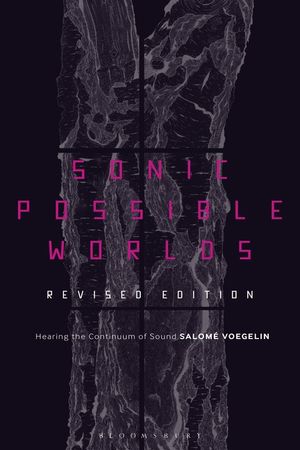
In Sonic Possible Worlds, Salom Voegelin adapts and develops a theory of sound inspired by its use in literary theory, film criticism, and the discourse of game design. It proposes that at present traditional musical compositions and contemporary sonic outputs are approached and investigated through separate and distinct critical languages and histories. As a consequence, no continuous and comparative study of the field is possible.
The revised and updated edition of Sonic Possible Worlds continues Voegelin's exploration of this theory, placing new emphasis on the feminist perspective. It includes an updated introduction as well as a new chapter on sonic possible worlds' radical power to rethink and react to current normative constructions of the body. It investigates works across genres and time periods, enabling a comparative engagement, and engaging with texts and artists new to this edition including bell hooks, Helene Cixous, Clarice Lispector, Audre Lorde, Sarah Ahmed, Aine O Dwyer, and Jocy de Oliveira.- Format: Trade Paperback
- Author: Voegelin, Salomé
- ISBN: 9781501367625
- Condition: New
- Dimensions: 8.90 x 0.70
- Number Of Pages: 264
- Publication Year: 2021
Language:
English