


Select A Store
Select Store
My Store:
Select A Store
Availability:
-
Online Only
$5.00
Overview
Overview
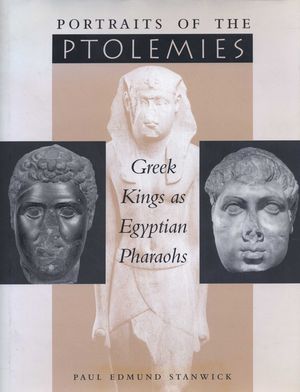
The Ptolemaic dynasty drew on the rich Egyptian heritage that they inherited, combined with unequalled wealth and a strong religious identity, to produce a unique medium of legitimation, that of royal portraiture. Blending Egyptian and Greek styles, sculptural portraiture and those found on coins were a major propaganda tool, crucial in the process of legitimation of the Ptolemies, and also had physical and conceptual functions. This study looks at the visual vocabulary' envoked by the portraits, their characteristics and stylistic changes through time, placed within the context of social and political developments. More than 150 examples are given in an illustrated catalogue, arranged in chronological order.
- Format: Hardcover
- Author: Stanwick, Paul Edmund
- ISBN: 9780292777729
- Condition: Used
- Dimensions: 11.38 x 0.85
- Number Of Pages: 256
- Publication Year: 2002
Language:
English