


Select A Store
Select Store
My Store:
Select A Store
Overview
Overview
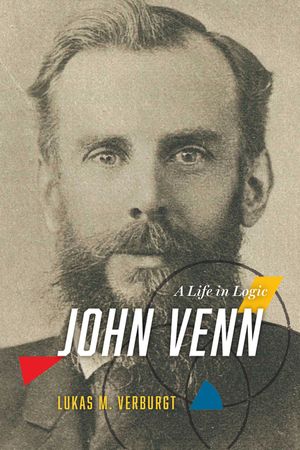
The first comprehensive history of John Venn's life and work. John Venn (1834-1923) is remembered today as the inventor of the famous Venn diagram. The postmortem fame of the diagram has until now eclipsed Venn's own status as one of the most accomplished logicians of his day. Praised by John Stuart Mill as a "highly successful thinker" with much "power of original thought," Venn had a profound influence on nineteenth-century philosophers, ranging from Mill and Lewis Carroll to Charles Sanders Peirce. Venn was heir to a clerical Evangelical dynasty but religious doubts led him to resign Holy Orders and instead focus on an academic life, writing influential textbooks on probability theory and logic and advocating alongside Henry Sidgwick for education reform, including that of women. Through his students, a direct line can be traced from Venn to the early analytical philosophy of G. E. Moore and Bertrand Russell, and family ties connect him to the famous Bloomsbury group. This essential book takes readers on Venn's journey from Evangelical son to Cambridge don to explore his life and work in context. Drawing on Venn's key writings, published and unpublished, Lukas M. Verburgt unearths the legacy of the logician's wide-ranging thinking while offering perspective on broader themes in religion and the academy in Victorian Britain. The picture that emerges of Venn, the person, is of a man with many sympathies--sometimes mutually reinforcing and at other times outwardly and inwardly contradictory.
- Format: Hardcover
- Author: Verburgt, Lukas M.
- ISBN: 9780226815510
- Condition: Used
- Number Of Pages: 448
- Publication Year: 2022
Language:
English