


Select A Store
Select Store
My Store:
Select A Store
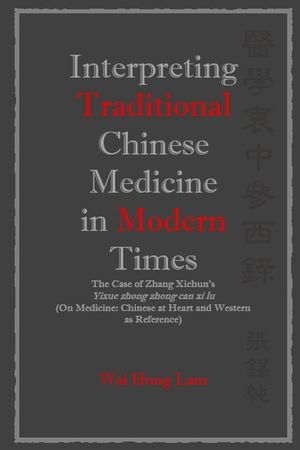
Interpreting Traditional Chinese Medicine in Modern Times: The Case of Zhang Xichun's Yixue zhong zhong can xi lu (On Medicine: Chinese at Heart and W
by Lam, Wai Hung
Availability:
-
Online Only
$55.74
Overview
Overview
Yin-yang 陰陽, qi 氣 and shen 神, originated in ancient Chinese philosophy, are seen as the foundational concepts of traditional Chinese medicine. Historically, these concepts were employed by practitioners of traditional Chinese medicine to articulate and account for the phenomena they encountered in clinical practice. However, yin-yang, qi and shen are almost always dismissed as vague, outdated and lacking scientific clarity in modern times.
This book examines how these philosophical constructs have been interpreted as well as applied in traditional Chinese medicine. Particular attention is given to the work of Zhang Xichun 張錫純 (1860-1933), an advocate of the communication between Chinese medicine and Western medicine. Through an analysis of Zhang's work and historical context, this book explores how he understood yin-yang, qi and shen in the framework of traditional Chinese medicine and gave these old concepts renewed vigour and relevance in late Qing and early Republican China, amid the fierce debate over whether Chinese medicine should be abolished. Such a review will help clarify the meanings of yin-yang, qi and shen, trace how traditional Chinese medical theories have evolved, and suggest ways for traditional Chinese medicine to continue to find meaning today.
This book examines how these philosophical constructs have been interpreted as well as applied in traditional Chinese medicine. Particular attention is given to the work of Zhang Xichun 張錫純 (1860-1933), an advocate of the communication between Chinese medicine and Western medicine. Through an analysis of Zhang's work and historical context, this book explores how he understood yin-yang, qi and shen in the framework of traditional Chinese medicine and gave these old concepts renewed vigour and relevance in late Qing and early Republican China, amid the fierce debate over whether Chinese medicine should be abolished. Such a review will help clarify the meanings of yin-yang, qi and shen, trace how traditional Chinese medical theories have evolved, and suggest ways for traditional Chinese medicine to continue to find meaning today.
- Format: Trade Paperback
- Author: Lam, Wai Hung
- ISBN: 9798267117791
- Condition: New
- Dimensions: 9.00 x 0.71
- Number Of Pages: 340
- Publication Year: 2025
Language:
English