


Select A Store
Select Store
My Store:
Select A Store
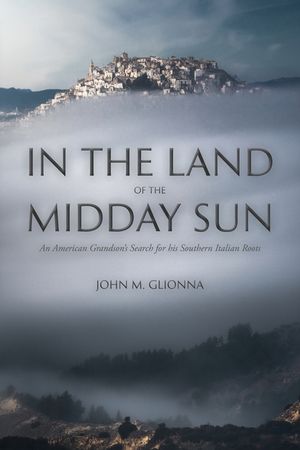
In the Land of the Midday Sun: An American Grandson's Search for his Southern Italian Roots
by Glionna, John M.
Availability:
null
Overview
Overview
The Italy of the John M. Glionna's ancestors cannot be found in the museums of Florence, among treasures shaped by the exquisite touch of da Vinci and Michelangelo, but a world away, on the peninsula's infamous boot. Their hands gnarled from planting pomodori, aglio and melanzana, his forefathers were peasant-farmers from the agrarian south - that other Italy - dirt-poor and uneducated, a land with a history of witch's spells and pagan gods. For them, working the earth wasn't art, it was a fundamental duty.
In 2023, Glionna experienced a cultural awakening: he travelled to his grandfather's home village to explore the landscape where his roots run centuries-deep. As he meets distant relatives, he asks questions echoed by all Americans exploring their ancestral homeland: "Who are these people?" "Who am I?" As a veteran Los Angeles Times journalist in search of his long-repressed Italianitá, he travels far off the tourist map, where he examines his grandfather's motives for emigrating. Beyond poverty and disease, he learns, southerners of his era faced a historic discrimination from their own countrymen that also drove them abroad. The book examines his father's upbringing as a child of immigrants and focuses on a realization that the author, like his father and grandfather, is proudly, deeply Italian, southern Italian.
- Format: Trade Paperback
- Author: Glionna, John M.
- ISBN: 9781599542508
- Condition: New
- Dimensions: 9.00 x 0.64
- Number Of Pages: 282
- Publication Year: 2026
Language:
English