


Select A Store
Select Store
My Store:
Select A Store
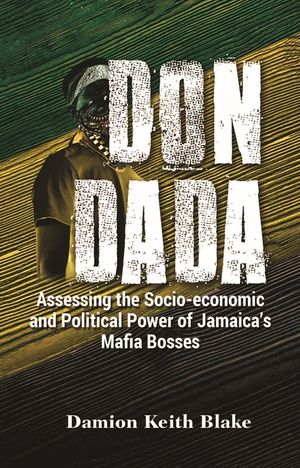
Don Dada: Assessing the Socio-Economic and Political Functions of Jamaica's Mafia Bosses
by Blake, Damion Keith
Availability:
-
Online Only
$35.00
Overview
Overview
In May 2010, the Jamaican government
used its military and police arms of the state to capture, arrest and extradite
Christopher 'Dudus' Coke to the United States on drug trafficking charges. Coke
was Jamaica's last mega don. He derived this status from his considerable political
influence, financial wealth and the para-military prowess accorded to him from
leading the infamous 'Showa Posse' gang.
The Jamaican don is a violent
non-state actor who wields considerable power and control inside the nation's
garrison communities. A don is a male figure, usually from the community in
which he plays a leadership role. Garrisons in Jamaica have often emerged as
neighbourhoods that are don-ruled shadow versions of the official state. These
are poor inner-city communities characterised by homogeneous, and in some
cases, over-voting patterns for one of Jamaica's two major political parties:
The People's National Party (PNP) or the Jamaica Labour Party (JLP). This book
explores the major roles dons play in Jamaican garrisons. It focuses on a
cluster of communities in the downtown metro area of Kingston, Jamaica.
Additionally, it investigates the factors that account for the evolution of
such roles performed by dons from the 1960s to the present. The author used
governance theories and the concept of embeddedness as an analytic framework to
interpret the power and authority dons have in garrisons. It ends with
suggestions on how to dissolve the power of dons and their gangs in Jamaica's
inner-city communities.
used its military and police arms of the state to capture, arrest and extradite
Christopher 'Dudus' Coke to the United States on drug trafficking charges. Coke
was Jamaica's last mega don. He derived this status from his considerable political
influence, financial wealth and the para-military prowess accorded to him from
leading the infamous 'Showa Posse' gang.
The Jamaican don is a violent
non-state actor who wields considerable power and control inside the nation's
garrison communities. A don is a male figure, usually from the community in
which he plays a leadership role. Garrisons in Jamaica have often emerged as
neighbourhoods that are don-ruled shadow versions of the official state. These
are poor inner-city communities characterised by homogeneous, and in some
cases, over-voting patterns for one of Jamaica's two major political parties:
The People's National Party (PNP) or the Jamaica Labour Party (JLP). This book
explores the major roles dons play in Jamaican garrisons. It focuses on a
cluster of communities in the downtown metro area of Kingston, Jamaica.
Additionally, it investigates the factors that account for the evolution of
such roles performed by dons from the 1960s to the present. The author used
governance theories and the concept of embeddedness as an analytic framework to
interpret the power and authority dons have in garrisons. It ends with
suggestions on how to dissolve the power of dons and their gangs in Jamaica's
inner-city communities.
- Format: Trade Paperback
- Author: Blake, Damion Keith
- ISBN: 9789766408930
- Condition: New
- Dimensions: 9.00
- Number Of Pages: 164
- Publication Year: 2024
Language:
English